6/09/2011
Summer = new kimono - 夏=新しい着物
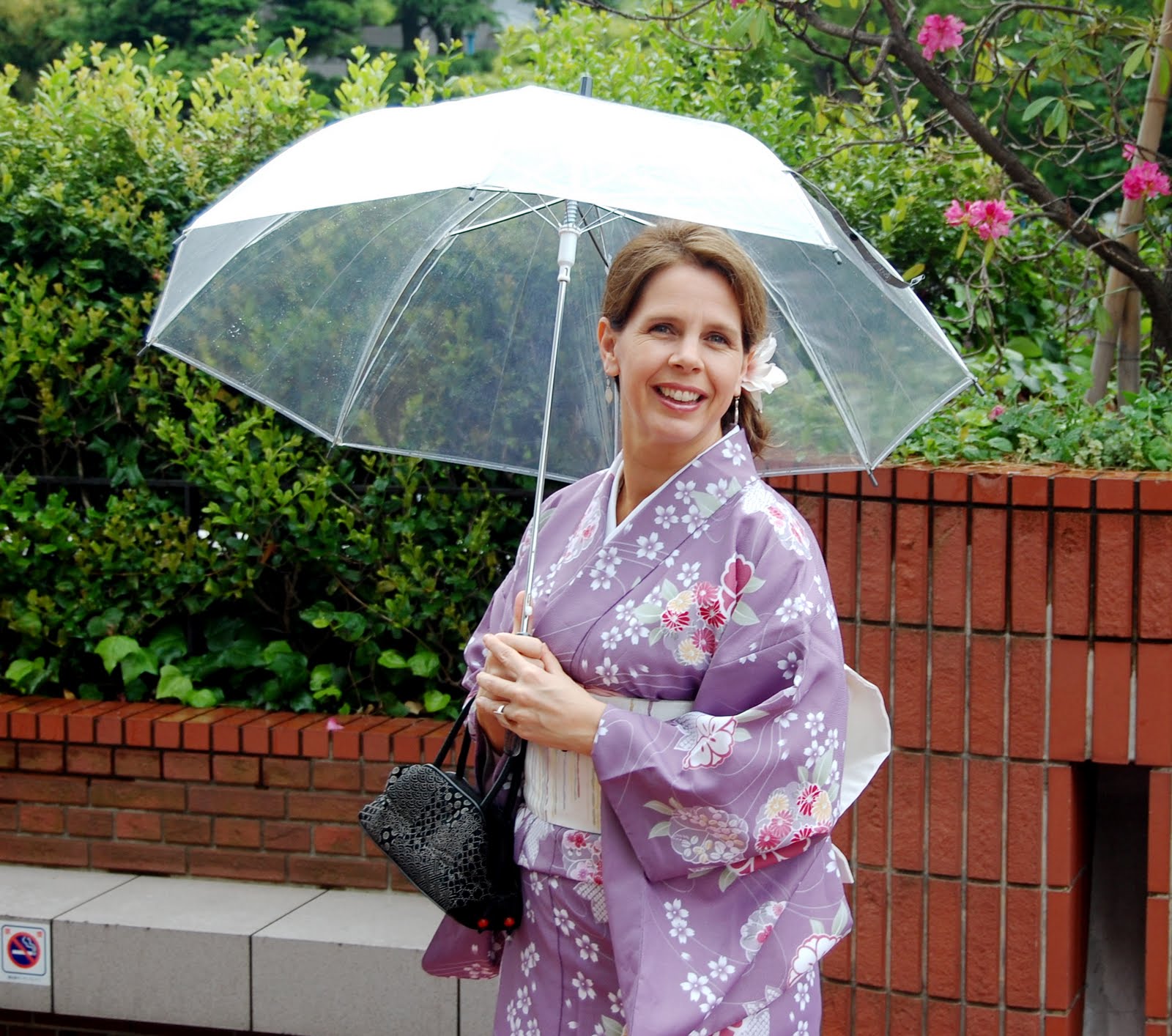
I love summer. It's one of my favourite seasons! In kimono fashion there are two versions of summer. Hitoe (single layer kimono) and yukata (cotton kimono). Hitoe is usually silk or polyester (not cotton), is unlined (hence the single-layer) and is worn like kimono (including with socks). It is worn in June and September, when the weather is mild but not too hot. It also has a lighter obi (sash). I found this one at Sayuki-san's shop in Asakusa and loved it for the origami crane design. It's polyester, so will be fine during the rainy season (which will be most of June).
夏が大好きです。一番好きな季節かもしれない!着物の世界では、夏を2つの着物で表現します:一重と浴衣。一重の着物は大抵綿ではなく、ライニングのないシルクかポリエステルで創られてあり、足袋と合わせて、着物と同じように着ます。天気が暖かい時期、6月と9月に着ます。帯も普通の着物より薄いのを付けます。この一重着物は、浅草にある Sayuki さんのお店で見つけました。折紙の鶴のデザインが大好きです。ポリエステルなので、雨が降っても大丈夫です。
6/07/2011
Guest Post by Hiromi Asai - Hiroさんのゲストポスト
This blog project usually has two parts: I write about my activities and adventures in kimono and I also write "reflections on kimono" and ponder the world of kimono. I often wonder why kimono is in decline (read here) and if kimono can be styled or interpreted differently (read here).
普通は2つの流れでこのブログを書いています:着物を着ている時の私のアクティビティや冒険について。または、着物世界を考える「着物について」。現在、なぜ着物が低下しているかについてよく考えますし(読む)、着物の新しいスタイリングや解釈についてもよく考えます( 読む)。
Hiromi Asai, a kimono stylist from New York, graciously submitted the following -
ニューヨークで着物スタイリストとして活躍している、アサイヒロミ(Hiro) さんが以下を提出して下さいました:
Liberate the Kimono
Appeared in LETTERS TO THE INTERNATIONAL HERALD TRIBUNE
Published: March 11, 2011
Kumiko Makihara (“Kimono Lessons,” Meanwhile, March 4) described the typical point of view regarding kimonos in Japan: Most Japanese people believe that the kimono is only a ceremonial dress and that there are strict rules on how and when to wear it.
And as Ms. Makihara writes, many Japanese people don’t know how to properly put on a kimono because they lack basic knowledge of the traditional culture.
Indeed, the kimono has a long history — more than 1,000 years — but most of the rules that the Japanese rely on today were established just 150 years ago, or less. The kimono has been worn much more freely for most of its history.
Unfortunately, the kimono market has been dramatically shrinking, in part because the Japanese seem attached to the rules that prevent wider use of the dress.
As a kimono fashion stylist, I would like the kimono to be recognized as a fashionable garment, not just a traditional or ceremonial dress. Today’s rules for kimono wearing certainly should be taught, and I teach them to my students, but the kimono should be worn without any inhibition.
The kimono should be recognized as a garment that is beyond cultural and ethnic boundaries. It is my hope that people will learn to enjoy wearing the kimono in a more relaxed manner.
Hiromi Asai, New York
------------
着物は長い歴史の中で、日本で華開いた世界でも稀に見る優美なファッションです。
文化や国境を越え、ファッションとして受け入れられる着物には表現の多様さがあり、世界のフォーマルウェアになると信じています。
着物スタイリストとして、ファッションの発信地であるニューヨークから活動を開始しました。様々なテーマや世界観を着物で創造し、ファッションとしての着物を表現していきます。
芝居好きの母の影響で、幼いころから歌舞伎や和のお稽古事が身近な環境で育つ。
大学では、歌舞伎を研究し、国立劇場演出家の織田紘二先生の授業で、歌舞伎の演出や時代衣裳、舞台衣裳にさらに興味を持つ。
時代衣裳の演出について、着物にまつわる文化への理解と所作の勉強も深めたく、
茶道(裏千家 靖国神社行雲亭 桜井宗梅先生)、日舞(西川流宗家 西川箕乃助先生)や能(京都観世流 橋本光史先生)に師事し、稽古を積む。
着物の技術を更に勉強する必要性を感じ、駒込和装学院にて、着付けの技術と和裁の技術を学ぶ。着物の着付け「一級講師(師範)」資格を取得後、プロの着物スタイリストとして活動を開始。
時代衣装の着付を松竹衣裳の笹島寿美先生から学ぶ。
2008年夏から夫の仕事の関係でニューヨークに渡り、9月にKimono Hiro in NYを創業。
海外から着物を見たとき、和がテーマの舞台や催し、特別な席など、限られたところでしか着物は着られないものだという概念が出来ていることを痛感。
ファッションとしての着物の、素晴らしさや表現の多様さを広めたく、全米、全世界に向けて活動。
着物スタイリストとして、いろんなテーマや世界観を着物で表現・創造していく作品作りを中心として活動中。
普通は2つの流れでこのブログを書いています:着物を着ている時の私のアクティビティや冒険について。または、着物世界を考える「着物について」。現在、なぜ着物が低下しているかについてよく考えますし(読む)、着物の新しいスタイリングや解釈についてもよく考えます( 読む)。
Hiromi Asai, a kimono stylist from New York, graciously submitted the following -
ニューヨークで着物スタイリストとして活躍している、アサイヒロミ(Hiro) さんが以下を提出して下さいました:
![]() |
| credit: MUNALUCHI Bridal Magazine, styled by Hiromi Asai |
Liberate the Kimono
Appeared in LETTERS TO THE INTERNATIONAL HERALD TRIBUNE
Published: March 11, 2011
Kumiko Makihara (“Kimono Lessons,” Meanwhile, March 4) described the typical point of view regarding kimonos in Japan: Most Japanese people believe that the kimono is only a ceremonial dress and that there are strict rules on how and when to wear it.
And as Ms. Makihara writes, many Japanese people don’t know how to properly put on a kimono because they lack basic knowledge of the traditional culture.
Indeed, the kimono has a long history — more than 1,000 years — but most of the rules that the Japanese rely on today were established just 150 years ago, or less. The kimono has been worn much more freely for most of its history.
Unfortunately, the kimono market has been dramatically shrinking, in part because the Japanese seem attached to the rules that prevent wider use of the dress.
As a kimono fashion stylist, I would like the kimono to be recognized as a fashionable garment, not just a traditional or ceremonial dress. Today’s rules for kimono wearing certainly should be taught, and I teach them to my students, but the kimono should be worn without any inhibition.
The kimono should be recognized as a garment that is beyond cultural and ethnic boundaries. It is my hope that people will learn to enjoy wearing the kimono in a more relaxed manner.
Hiromi Asai, New York
------------
着物は長い歴史の中で、日本で華開いた世界でも稀に見る優美なファッションです。
文化や国境を越え、ファッションとして受け入れられる着物には表現の多様さがあり、世界のフォーマルウェアになると信じています。
着物スタイリストとして、ファッションの発信地であるニューヨークから活動を開始しました。様々なテーマや世界観を着物で創造し、ファッションとしての着物を表現していきます。
芝居好きの母の影響で、幼いころから歌舞伎や和のお稽古事が身近な環境で育つ。
大学では、歌舞伎を研究し、国立劇場演出家の織田紘二先生の授業で、歌舞伎の演出や時代衣裳、舞台衣裳にさらに興味を持つ。
時代衣裳の演出について、着物にまつわる文化への理解と所作の勉強も深めたく、
茶道(裏千家 靖国神社行雲亭 桜井宗梅先生)、日舞(西川流宗家 西川箕乃助先生)や能(京都観世流 橋本光史先生)に師事し、稽古を積む。
着物の技術を更に勉強する必要性を感じ、駒込和装学院にて、着付けの技術と和裁の技術を学ぶ。着物の着付け「一級講師(師範)」資格を取得後、プロの着物スタイリストとして活動を開始。
時代衣装の着付を松竹衣裳の笹島寿美先生から学ぶ。
2008年夏から夫の仕事の関係でニューヨークに渡り、9月にKimono Hiro in NYを創業。
海外から着物を見たとき、和がテーマの舞台や催し、特別な席など、限られたところでしか着物は着られないものだという概念が出来ていることを痛感。
ファッションとしての着物の、素晴らしさや表現の多様さを広めたく、全米、全世界に向けて活動。
着物スタイリストとして、いろんなテーマや世界観を着物で表現・創造していく作品作りを中心として活動中。
6/06/2011
Meeting the White Geisha - Sayukiさんと合いに
Last week I headed off to Asakusa to meet the 'White Giesha' - although it sounds like something out of a fairy tale, there really is a foreign geisha. Sayuki took an MBA at Oxford before turning to social anthropology, and specializing in Japanese culture. She has spent half of her life in Japan, graduating from Japanese high school, and then becoming the first white girl to enter Japan’s oldest university, Keio.
先週、白人の芸者さんと合いに浅草に行きました。物語のように聞こえますが、本当に外国人の芸者がいます。オックスフォード大学にて MBA を取得し、日本文化を中心とした社会人類学を研究されているそうです。人生の半分位は日本で過ごし、日本の高校を卒業した後、京王大学に入学した初外国人だったそうです。
Sayuki has lectured at a number of universities around the world, and has published several books on Japanese culture. She is also an anthropological film director with credits on NHK, BBC, National Geographic Channel programmes.
Sayuki さんは世界中の大学で講義したり、日本文化についての本も出版されました。NHK, BBC, ナショナルジオグラフィクチャンネルで放送されたことのあるような社会人類学の映画監督でもある女性です。
And she's opened her own shop in Asakusa, one of the oldest and most traditional neighbourhoods in Tokyo. I wanted to find out how long it takes a geisha to get dressed, see how many kimonos she owns and see if I could get a hitoe (single-layer) kimono to wear for June and September.
そして今は東京で最も古くて伝統的な近所の一つ、浅草でお店をオープンされました。芸者さんが着付けするのにどのくらいの時間が掛かるのか、また着物を何着持っているのかを知りたかったです。6月と9月に着る一重の着物も探しに行きました。
The store has lots to draw kimono fans, both Japanese and foreign. Kimono Beginners can buy a "full set" of underwear including footwear for 15,000 yen at the shop. Then If you add a recycled kimono and a recycled obi from 2000 yen upwards you have a full set of kimono for around 20,000 - 30,000. Sayuki and her team can dress you in the shop and teach you how to do it, and you can take your full kimono outfit home with you. It is common for groups to head to the shop and then to all go out to lunch together at a tea-house.
外国人にも日本人にも魅力的なお店だと思いました。着物ビギナーにとっては、着物と帯から草履までの「一式セット」がとても便利だと思います。リサイクル品であれば、2万円程度で買えます。紗幸さんと彼女のチームが、お店で着付けを教えてくれますし、そのまま町や家に帰れます。グループ団で訪問する場合は、お店での着付け後、皆で茶店によってお食事をすることもできるそうです。
Sayuki's tsukeobi: the geisha obi that you can tie yourself in 3 minutes. Anyone can bring their own obis to the shop and get them made into a tsukeobi for 3150 yen (Sayuki says this is helpful because 100% of Japanese women have obis at home though only 8% can now tie them). She also says this is her secret to getting fully dressed in under 10 minutes!
紗幸の付け帯:たった3分で結べる芸者さんの帯。自分の帯をお店に持って行けば、3150円で付け帯に加工してもらってそのまま家の持って帰れます。Sayuki さんによると、日本の女性は全員家に帯がありますが、8%しか結ぶことができないそうです。この帯は、紗幸さんの10分以下の着付け時間のヒミツでもあるそうです!
Lastly, anyone can send Sayuki-san a box of the kimono they have at home that they may have inherited and don't know what to do with, and Sayuki and her team can provide advice on what you have, what you need to add, and coordinate some new ensembles for you. All ways to make kimono wearing as easy as possible.
最後に、相続した着物をお持ちの方も多いと思いますが、お持ちの着物を紗幸さんに送れば、彼女からそれをどのように着ればいいか、またコーディネートのアドバイスも貰えるのです。なるべく着物を着やすくしてくれる、すべてのことを。
Under her watchful eye, I was suited up in a hitoe (single layer) kimono, including summer underwear, obi (sash), obijime (sash tie) and obiage (silk scarf) for about 15,000 yen.
紗幸さんの指揮によって夏用の襦袢に一重の着物、帯、帯締め、そして帯下げまで付けていただきました。全部で15000円位でした。
This makes my 6th kimono (one for every month of the project) now. As for Sayuki-san - as a geisha she requires so many more. She has around 100!
これで私の着物コレクションの6着目になります!このプロジェクトの月と一致しますね。しかし芸者の 紗幸さんはもっともっと必要です。100枚位持っているそうです!
6/03/2011
Reflections on Kimono - 着物について
So imagine this; you've been to the doctor and to the gym and now you are rushing to put on your kimono to go grocery shopping before it rains but you can't get your otaiko masubi (drum bow) right. Perspiration is breaking out on your upper lip, you are so frustrated you might cry and you think "if I don't get it this time, I give up." And then like magic, it all comes together, you walk outside and people start to smile at you and greet you and say things like "oh, so beautiful!"
想像してみてください。お医者さんのところに行って、ジムに行って、雨が降って来る前にスーパーに行けるよう、慌てて着物を着ようとしているが、お太鼓結びがなかなかうまく行かない。上唇に汗が出てきて、フラストレーションが溢れてきて、もう泣き出しそうな状態で「今度失敗したらもう諦める!」という状況。すると魔法のようになんとかなって、外に出ると人が笑顔を向けてくれたり、「あら、素敵」などとすれ違いに言ってくれる。
The transformation was so sudden, my husband remarked "this kimono is like a super-hero costume! You put it on, and immediately you become 'beauty woman'! You just need a super-power!" Alright, I'm not exactly a super-hero, but he is right. Regardless of how hard it is to get the kimono perfect sometimes or how tired I feel, the Japanese reactions always buoy me and really lift my spirits. (If you missed it, you can read about the opposite effect kimono has on Canadians here.)
この変身があまりに急で、主人が「この着物、ヘロインの衣装みたいじゃない?!着たとたんに『ビューティーウーマン』になるね。スーパーパワーも必要じゃない?」とある日言いました。まあ、スーパーヒーローからはかなり遠いけれど、主人の言葉に真実もあります。どんなに疲れていて、着付けがうまく行かなくてイライラしていても、着付けさえ終えて、日本人の反応(カナダ人の反応はこちら)を感じると、すぐに気分が上達します。
Yesterday I heard comments like / 昨日はこういう言葉を頂きました:
"You are beautiful, even from behind!" Which sounds funny as I write it, but I knew she meant that I had gotten my otaiko masubi (drum bow) right. 「後ろから見てもきれいですね!」書くとちょっと可笑しいですが、帯の結び方がきれいにできたという意味だと分かりました。
"Edo Blue makes me happy!" 「江戸ブルー大好き!」
"So beautiful!" 「美しい!」
So, it's all got my husband wondering. Two things, actually. Firstly, he wonders if the same thing would happen if he were to put on kimono. Would people rush up to him and say "oh, so handsome!"
And secondly, if there is a 'super-hero'/ beauty costume in Western culture? One where the moment you put it on you go from being a tired, run-of-the-mill person - to eye-catching! Do we have one? I don't think so.
Oh, kimono - how lovely you truly are!
主人も考え始めたそうです。2つのことを。1つは、もし彼が着物姿で街に出たら同じような反応を招くかどうかを。擦れ違いに人々が「なんとハンサム!」などと言ってくれるかどうか。
そして、欧米にはこのような「スーパーヒーロ」衣装はあるのかどうかを。着た途端に、疲れた普通の人が、人目を引くような存在に変身するような服。あるかしら?ないと思います。
着物って、なんと素晴らしいもの!
5/29/2011
Grocery Shopping - 食品買い物
People often ask me: 'do you wear kimono every day?" And I have to answer: "no, not every day." And the reason is this... my life is busy, and sometimes kimono doesn't always work for a modern, urban woman's lifestyle. For example - some days I work at a different location from my home, stop off and do yoga, then meet up with some friends in a smokey izakya (Japanese bar). Kimono works well in the beginning of the day, but as the day goes on, it gets more complicated; the yoga studio is small - where would I fold my kimono before yoga class begins, the bar is smokey - the kimono would have to be cleaned before I wore it again. So I have to answer: "no, not every day."
「毎日着物を着ているの?」とよく聞かれます。すると、「いいえ、毎日は着ないね」と答えなければなりません。その理由は次の通りです。私は忙しい毎日を過ごしていまして、着物はモダーンで都会的な女性のライフスタイルと会わない場合もあるからです。時々外で仕事をしたり、ヨガのレッスンにも通ったり、夜には煙りっぽい居酒屋で友達と会ったりもしています。このようなスケジュールの日には、着物はお昼ぐらいまで邪魔にならず大丈夫ですが、その後から難しくなってきてしまいます。ヨガのスタジオの着替え質は狭くて度々着物を畳んでまた着付けしなければならないこととか、煙っぽいところにいると次着る前に洗わなければならないことなど、色々な問題があります。このため、「毎日は着ないね」と答えざるを得ない。
And when I meet women in kimono, I ask them the same question. And then if they say yes, I ask them "even to the grocery store?" I don't know why I have fixated on this, the most mundane of chores, but it's my test. Firstly, you have to leave the house. There are two safe bets on what occassion works for kimono; you are going 'out' and it's occassion wear or you put it on every morning like most people put on their clothes (without thinking about it) and that's it. But for some reason, this idea of wearing it grocery shopping marks the test. And most women answer: "no, not for grocery shopping."
私も着物を着ている女性に合うと同じ質問を聞きます。そしてもし答えが「はい」だと、「スーパーにも着ますか?」と聞く癖があります。なぜかこの場面がいつも頭に浮かぶのです。私の中のテストかな。まずは、家を出なきゃいけない。着物姿で出かける理由は大体2つあります:特別なイベントのためか、普段着で着ている人はいつも通りに。しかしなぜか、スーパーまでにも着物姿で行く人は私の中のテストに合格します。でも、ほとんどの女性は「いや、スーパーには着ないな」と答えます。
So I decided to try it. I was out, I was in kimono, and it was my grocery day. Kimono is great for shopping - but it's the after shopping part where kimono doesn't quite work. Luckily, my photographer (my husband) also carries the bags!
なので、やってみよう!と思いました。食品買い物の日に、着物を着て、スーパーへ行きました。買い物中、着物は良かったですが、その後から少し難しくなりましたな。でも、(私の主人でもある)写真家のおかげで家まで運ぶことは何とかなりました!
5/24/2011
Kimono Seasons - 着物の季節
I had it wrong.... I still can't get the kimono calendar right. I was so looking forward to wearing yukata (a lightweight, cotton kimono) which I thought I could starting in June. But...I had it wrong. Currently I wear a double-layer nagajuban (the under kimono) and a double-layer kimono. Now that it's May, I can change to single-layer nagajuban. And I can change to a single-layer kimono in June. I can't wear yukata until July and August. But it is 29°C today - I don't know how I will make it to July!
また間違えてしまいました!私、着物のカレンダーはまだマスターできていないな。浴衣を着れるようになるのが楽しみすぎで、6月ぐらいから着れるのかと思っていました。しかし、そうは行きませんよね。今までは二重の長襦袢と二重の着物を着ていました。5月になってから1枚の長襦袢にチェンジしました。そして、6月になったら1枚の着物にチェンジできます。でも浴衣は7月か8月まで我慢だ!なのに今日は既に29°Cです。いったいどうすれば7月まで持てるのかしら!
5/21/2011
At the photography museum - 写真の博物館で
In case you hadn't noticed, one of my other passions is photography! Tokyo has an amazing Photographic museum and last week we had a chance to visit! I tried to match the woman in kimono and become part of the picture!
皆様ご存知でしたか?私のもう一つの趣味はフォトグラフィーです!東京に素晴らしい写真の博物館がありまして、先週行く機会ができました!写真の中の着物女性と馴染もうとしてみました!
And then we walked around the gardens near the museum. People keep asking about the situation now in Japan, and it is improving slowly but surely. The nuclear disaster is the thing that most affects Tokyoites, and that we take day-by-day.
そして博物館の辺りのガーデンも歩き回りました。外国の友達からは、今の日本の状況についてよく聞かれますが、だんだん上達してきていますよね。東京人にとっては原爆が第一の不安だと思いますが、1日づつですね。
The radiation levels in the city seem to be reducing and, as we enter typhoon season, most storms and strong wind will continue that trend as they move from south to north, or west to east.
町の放射濃度も下がっているそうです。梅雨に入ってからも、ほとんどの強い風は南から北へ、東から西へと動くそうなので、より下がるだろう。
And Japan is re-examining their nuclear power plans and plants, and looking forward to re-creating themselves as leaders in the 'clean energy' fields. Lots to smile about!
そしてこれから日本は発電装置をまた調査して、世界中に「クリーンなエネルギー」を促進するよう頑張って行くそうです。笑顔の理由はたくさんありますね!
Subscribe to:
Posts (Atom)